Childhood Myopia • Ortho-K • Advanced Corneal Mapping
Thank you for reading this post, don't forget to subscribe!Corneal Topography for Orthokeratology and Myopia Control by Dr. Jignesh Gala in Andheri West
Is your child’s minus power increasing, or are you considering overnight Ortho-K lenses? At Crystal Clear Eye Clinic, Laram Centre, SV Road, Andheri West, Dr. Jignesh M. Gala, FRCS (Ophthalmology), Glasgow, uses detailed corneal mapping to assess suitability, lens centration and safety. With 25,000+ total eye procedures, two L V Prasad Eye Institute fellowships and Singapore experience, he provides structured myopia care for families from DN Nagar, Lokhandwala, Oshiwara, Versova and across Mumbai.
- Corneal topography is essential for precise Ortho-K assessment; spectacle power alone cannot describe corneal shape.
- Baseline and follow-up maps show treatment-zone regularity, centration and refractive change.
- Ortho-K may slow axial elongation, but cannot guarantee that myopia will stop.
- Strict hygiene, water avoidance and urgent review for pain or redness are mandatory.
- A complete plan also includes refraction, axial-length monitoring and discussion of alternatives.
1. Who Is Dr. Jignesh Gala?
Dr. Jignesh M. Gala is a Consultant Ophthalmologist & Eye Surgeon at Crystal Clear Eye Clinic, Laram Centre, SV Road, Andheri West. He has completed 25,000+ eye procedures, including 4,000+ phacoemulsification cataract surgeries, 3,000+ laser procedures, 300+ ROP treatments and extensive intravitreal injection work.
Qualifications
- MBBS — Grant Medical College & Sir J.J. Group of Hospitals
- DOMS — Seth G.S. Medical College & KEM Hospital
- FICO — International Council of Ophthalmology, London
- Refraction Certificate — United Kingdom
- MRCS — Royal College of Surgeons of Edinburgh
- FRCS (Ophthalmology) — Royal College of Physicians & Surgeons of Glasgow
- Comprehensive Ophthalmology Fellowship — L V Prasad Eye Institute
- Medical & Surgical Retina Fellowship — L V Prasad Eye Institute
- ROP training under Dr. Subhadra Jalali and Dr. Komal Agarwal
- International Observer/Resident Physician — Tan Tock Seng Hospital, Singapore
Authority and professional profile
Dr. Gala is Visiting Vitreoretinal Consultant at Jagjivan Ram Railway Hospital and was Assistant Professor at TNMC & BYL Nair Hospital (2019–2020). He received the C.S. Reshmi Best Video Session Award at AIOC 2020 and is an active BMJ Case Reports reviewer.
His research record includes three PubMed-indexed papers, F1000Research co-authorships and presentations at AIOC, VRSI, Uveitis Society and AIOS meetings. Research interests include ROP protocols, diabetic macular edema, premium-IOL satisfaction and phacoemulsification.
Memberships: AIOS and VRSI Life Member; Uveitis Society of India; ICO Fellow; Royal College of Physicians & Surgeons of Glasgow Fellow; Royal College of Surgeons of Edinburgh Member; MOA, Mumbai Ophthalmological Association and IMA Member; Medical Council of India/Maharashtra Medical Council registered.
Parents receive a clear explanation of corneal maps, realistic limits, alternatives and follow-up. Consultations are available in English, Hindi, Gujarati, Marathi, Telugu and Chinese. Second opinions are welcome. Read Dr. Jignesh Gala’s clinical profile.
2. What Are Corneal Topography, Orthokeratology and Myopia Control?
Myopia causes distant blur because light focuses in front of the retina, often as the growing eye becomes too long. An Indian systematic review found refractive error in about 8 per 100 children overall, with myopia more common in urban populations. The International Myopia Institute projects that nearly half the world may be myopic by 2050. See the Indian prevalence review and IMI global overview.
Ordinary spectacles correct present blur but do not necessarily slow eye growth. Myopia management therefore monitors both refractive power and, when available, axial length.
Orthokeratology, or Ortho-K, uses specially designed rigid gas-permeable lenses during sleep. They temporarily redistribute the superficial corneal epithelium, producing central flattening and a surrounding relative steepening zone. The lenses are removed in the morning; the effect is reversible and requires continued prescribed wear.
A 2024 review concluded that Ortho-K slows axial elongation compared with single-vision spectacles in many myopic children, although response varies. Read the 2024 Ortho-K efficacy review.
Corneal topography is a colour-coded map of curvature and symmetry. Two children with the same power can have different astigmatism, sagittal height and corneal apex position, so they may require different lenses. The source article on Ortho-K topography explains baseline mapping, difference maps and common fitting patterns.
3. When Should You See Dr. Jignesh Gala?
- Minus power increasing over six to twelve months
- Squinting, sitting close to screens or difficulty seeing the school board
- Strong family history of myopia
- Interest in daytime freedom from spectacles
- Glare, ghost images, blur or discomfort with an existing Ortho-K lens
The clinic is accessible from Andheri Railway Station, Andheri Metro, DN Nagar and Lokhandwala. Book through the appointment page.
Stop lens wear and seek same-day care for pain, increasing redness, light sensitivity, discharge, sudden blur or a white corneal spot. The American Academy of Ophthalmology warns that Ortho-K carries an infection risk, especially in children. See the AAO Ortho-K guidance.
4. Advanced Diagnosis at Crystal Clear Eye Clinic
- History and consultation: progression, previous prescriptions, family history, near work, outdoor time, allergy and contact-lens habits.
- Vision and cycloplegic refraction: accurate power measurement when indicated.
- Slit-lamp examination: tear film, lids, conjunctiva and cornea.
- CSO Sirius+ Scheimpflug tomography: anterior/posterior shape, curvature, elevation and pachymetry.
- IOL Master/biometry: axial-length monitoring where appropriate.
- Retinal examination: important in moderate/high myopia, flashes, floaters or reduced vision.
Many measurements can be reviewed during the same visit, often within about 15 minutes after a reliable scan, although the complete examination takes longer. The clinic also has OCTA, automated perimetry, Goldmann tonometry, YAG laser and green retinal laser.
The International Myopia Institute instrumentation report identifies corneal topography as crucial for Ortho-K suitability and fitting.
Understanding Ortho-K difference maps
- Axial map: treatment-zone smoothness.
- Tangential map: zone margin and centration.
- Refractive map: estimated correction achieved.
An ideal “bull’s-eye” has centred flattening with a uniform ring of mid-peripheral steepening. Central-island, smiley-face, frowny-face or lateral-decentration patterns may require lens redesign.
5. Treatment Options by Dr. Jignesh Gala
| Option | Advantages | Limitations |
|---|---|---|
| Ortho-K | Daytime freedom from spectacles; may slow axial growth. | Strict hygiene, skilled fitting, follow-up and infection awareness required. |
| Myopia-control spectacles | Non-contact and simple for many children. | Consistent wear is necessary. |
| Soft myopia-control lenses | Comfortable multizone daytime correction. | Replacement and hygiene schedules matter. |
| Low-dose atropine | No contact lens; useful alone or in selected combinations. | Response varies; possible light sensitivity or near blur. |
| Lifestyle measures | Outdoor time and near-work breaks support every plan. | Usually insufficient alone for established progressive myopia. |
Ortho-K fitting pathway
- Complete refraction, ocular-surface examination and mapping.
- Assess symmetry, astigmatism, sagittal profile and pupil size.
- Select or customise the reverse-geometry lens.
- Teach insertion, removal and disinfection with parental supervision.
- Review vision, corneal staining and topography after initial wear.
- Modify the lens if the zone decentre or vision remains unstable.
- Continue axial-length and retinal monitoring as indicated.
Families can also review adult refractive-surgery information and retina services. LASIK is not a myopia-control treatment for growing children.
6. Why Choose Crystal Clear Eye Clinic?
Specific technology
CSO Sirius+ tomography and IOL Master/biometry provide more detail than spectacle power or basic keratometry alone.
Whole-eye expertise
Dr. Gala’s retina, cataract and refractive background supports corneal assessment and retinal risk evaluation in high myopia.
Personalised counselling
Families receive a practical plan based on age, progression, hygiene maturity and lifestyle. “Vision is a right, not a privilege.”
Convenient location
Accessible from Juhu, Vile Parle, Jogeshwari, Goregaon, Santacruz, Khar, Bandra, Andheri East and Powai.
Community work includes free eye camps, school screening, diabetic-retinopathy talks, an NICU ROP network and education through YouTube @DrJMgala. Explore services at Crystal Clear Eye Clinic.
7. What to Expect Before, During and After Fitting
- Bring old prescriptions and previous topography/axial-length reports.
- Report allergy, dry eye, eye rubbing, redness or prior infection.
- Stop current contact lenses for the advised period before baseline mapping.
- Confirm that the child and parent can follow hygiene and reviews.
There is no injection, laser or surgery. Topography is non-contact. Parents and children learn lens handling before home wear.
Follow-up: early review checks vision, staining and centration; first-week review checks stability; later visits repeat topography, ocular-surface examination, refraction and axial-length monitoring.
| Do | Do not |
|---|---|
| Wash and dry hands; disinfect lenses as prescribed. | Never rinse lenses or cases with tap water. |
| Attend every scheduled review and keep backup spectacles. | Do not swim, shower or use a hot tub wearing lenses. |
| Stop wear and call for pain, redness or blur. | Do not continue wear through symptoms or share lenses. |
8. Cost, Insurance and Financing in Mumbai
Ortho-K cost depends on corneal complexity, lens design, mapping, fitting visits and replacement policy. A transparent estimate is given after examination. Specialty lenses may not be covered by every policy. Crystal Clear Eye Clinic has 30+ cashless TPA/insurance tie-ups for eligible services and EMI/financing options where applicable. See insurance information.
9. Clinical Scenarios and Patient Reviews
These are illustrative scenarios, not fabricated testimonials:
- Lokhandwala school child: regular maps and reliable parental supervision supported a monitored Ortho-K trial.
- Versova teenager: tangential mapping identified temporal decentration behind glare and ghosting, prompting lens redesign rather than a simple power increase.
- Bandra family: limited capacity for nightly supervision led to a safer myopia-control spectacle plan.
For independently published feedback, visit the testimonials page. No review predicts an individual outcome.
10. Frequently Asked Questions
Who should consider corneal topography for Ortho-K in Andheri West?
Children or adults being evaluated for orthokeratology should undergo detailed corneal mapping. It is especially important when myopia is progressing, astigmatism is present, vision fluctuates, or a previous Ortho-K lens has decentered.
Is corneal topography painful for a child?
No. Corneal topography is a quick, non-contact and painless scan. The child looks at a central target while the instrument maps the corneal surface.
Is orthokeratology permanent?
No. Ortho-K temporarily reshapes the corneal surface. The effect gradually reduces after lens wear is stopped, so continued wear and follow-up are needed to maintain daytime vision.
Can Ortho-K completely stop childhood myopia?
No treatment can guarantee that myopia will stop. Evidence shows that Ortho-K can slow axial elongation in many children, but the response varies and regular refraction and axial-length monitoring remain necessary.
Are Ortho-K lenses safe for children?
They can be used safely in carefully selected children when hygiene, water avoidance, lens disinfection and follow-up are strict. Overnight contact-lens wear carries a small but important risk of microbial keratitis, so pain, redness, light sensitivity or sudden blur requires urgent examination.
How do I reach Crystal Clear Eye Clinic from Andheri Railway Station?
The clinic is at A1-202, Laram Centre CHS, Swami Vivekanand Road, Andheri West, Mumbai 400058. It is close to Andheri Railway Station and accessible from Andheri Metro, DN Nagar, Lokhandwala, Oshiwara and Versova.
Does Dr. Jignesh Gala consult in Gujarati, Marathi or Hindi?
Consultations are available in English, Hindi, Gujarati, Marathi, Telugu and Chinese, helping families understand the examination, treatment choices and lens-care instructions clearly.
Is Ortho-K or myopia-control treatment covered by insurance?
Coverage varies. Routine consultations, corneal mapping and specialty contact lenses may not be covered by every policy. Crystal Clear Eye Clinic has 30+ TPA and insurance tie-ups for eligible services, and the team can clarify coverage and financing before treatment.
People Also Ask
Who is the best FRCS eye surgeon near Andheri West? “Best” depends on relevant training, examination quality and follow-up. Dr. Gala offers FRCS, MRCS, LV Prasad and Singapore training.
What is the success rate of Ortho-K? Success means safe wear, useful daytime vision, a centred map and slower axial growth; no single percentage applies to every child.
Is there parking near the clinic? Parking availability varies; call ahead when parking is important.
11. How to Book an Appointment with Dr. Jignesh Gala
Book a Corneal Topography and Myopia-Control Assessment
Crystal Clear Eye Clinic
A1-202, Laram Centre CHS, Swami Vivekanand Road, above Sunil Jewellers, near NADCO Shopping Centre, Andheri West, Mumbai, Maharashtra 400058
Nearby: Andheri Railway Station, Andheri Metro/DN Nagar, Bhavan’s College, Lokhandwala, Oshiwara, Versova, Four Bungalows and Seven Bungalows.
Phone/WhatsApp: +91-77188-85245
Websites: drjigneshgalaeye.com and crystalcleareye.in
YouTube: @DrJMgala
Hours: Monday–Saturday, 10 AM–8 PM; Sunday by appointment.
Second opinions welcome — bring your reports. Walk-ins are welcome subject to availability.
Medical disclaimer: This blog is for educational purposes only. Consult Dr. Jignesh Gala for personalised advice. Ortho-K is not suitable for every eye. For sudden vision loss, flashes, severe pain, increasing redness, discharge or light sensitivity, stop lens wear and seek immediate care.
Suggested Image Alt Texts
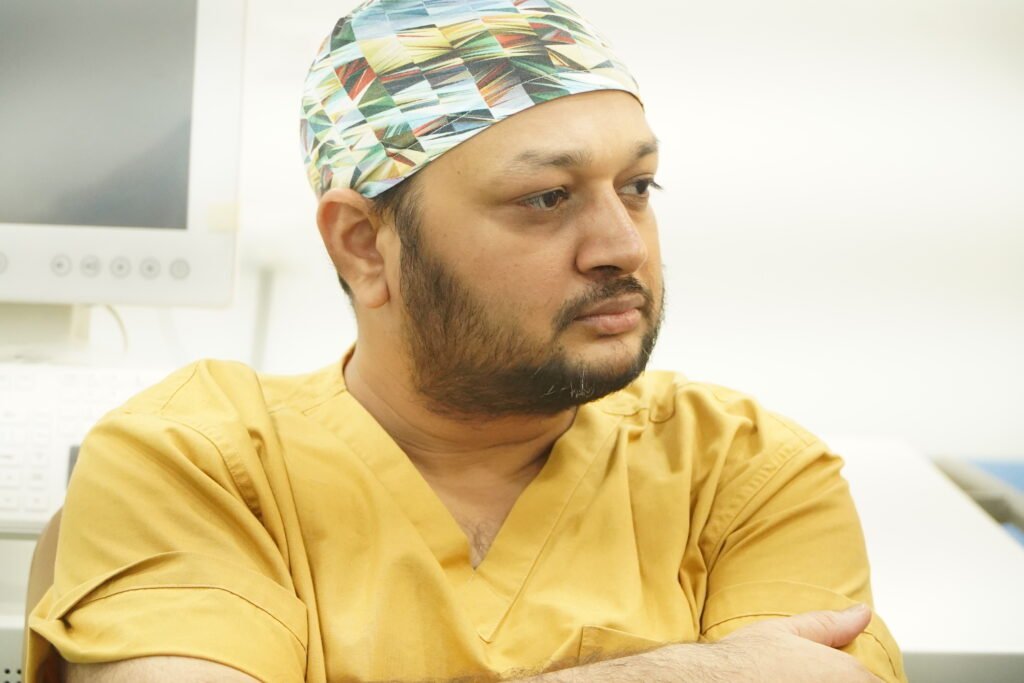
- Dr. Jignesh Gala reviewing corneal topography for Orthokeratology at Crystal Clear Eye Clinic Laram Centre SV Road Andheri West Mumbai
- CSO Sirius Plus corneal tomography for childhood myopia control near Andheri Railway Station
- Child undergoing corneal mapping for Ortho-K fitting near Lokhandwala Andheri West Mumbai
- Dr. Jignesh Gala FRCS counselling parents about myopia control near DN Nagar Andheri West