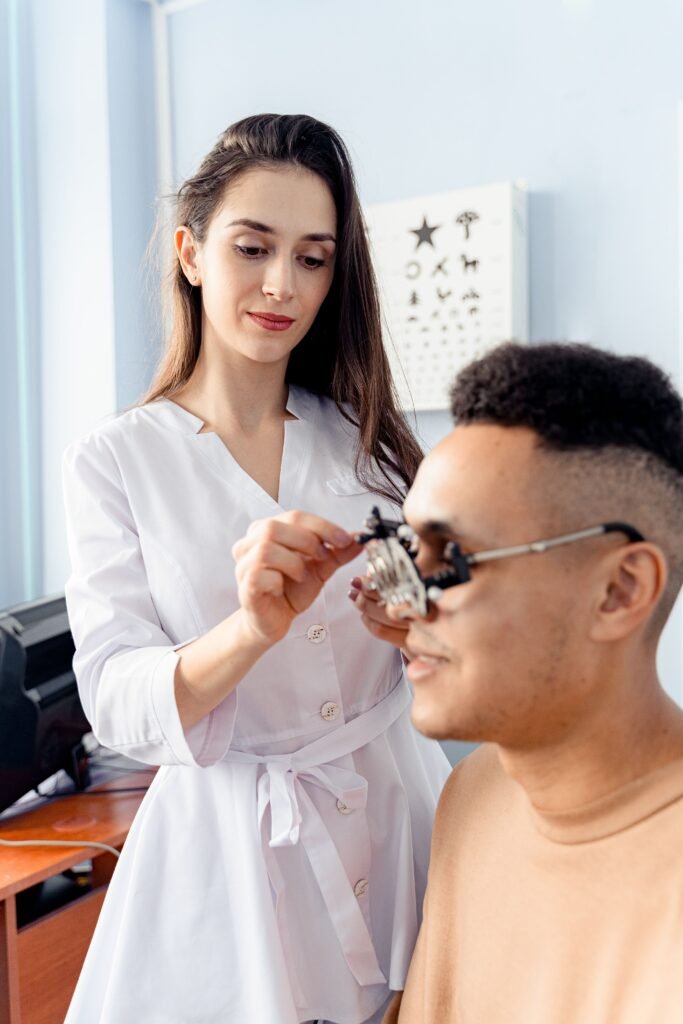
Comprehensive Eye Checkup for All Ages: 1 Month to 100 Years
Prevention is better than cure. Complete eye examination in Mumbai with advanced diagnostics including OCT, glaucoma screening, diabetic eye check & more. Trusted by 162,000+ patients. Because your vision deserves the best care.

30+ Insurance Companies
Why Regular Eye Checkups Matter
Many serious eye diseases have no symptoms in their early stages. By the time you notice vision changes, irreversible damage may have already occurred. Regular comprehensive eye checkups are the only way to detect problems early and protect your precious sight.
At Crystal Clear Eye and Topax Eye Care, Dr. Jignesh Gala emphasizes that early detection saves vision. Our state-of-the-art diagnostic technology can detect eye diseases years before symptoms appear, giving you the best chance for successful treatment.
Silent Eye Diseases That Show No Early Symptoms
- Glaucoma – "The silent thief of sight" – damages optic nerve gradually
- Diabetic Retinopathy – Leading cause of blindness in working-age Indians
- Age-related Macular Degeneration (AMD) – Central vision loss in seniors
- Retinal Detachment – Can cause sudden blindness if not caught early
- Cataract – Slow clouding of lens, often unnoticed initially
- Lazy Eye (Amblyopia) – Must be detected before age 7 for treatment
- Refractive Errors – Myopia, hyperopia, astigmatism affecting children
- Computer Vision Syndrome – Digital eye strain affecting working professionals

Glaucoma affects over 12 million people in India, and 90% are unaware they have it. Diabetic retinopathy affects 1 in 3 diabetics. These conditions cause irreversible vision loss if not detected early. A comprehensive eye checkup can detect these diseases in their earliest, most treatable stages. Don’t wait for symptoms – schedule your eye examination today by calling 077188 85245.
Eye Checkup by Age Group
Different life stages require different eye care approaches. Dr. Jignesh Gala provides comprehensive eye checkups tailored to each age group, from newborns to senior citizens over 100 years old.
| Age Group | Recommended Frequency | Tests & Screening Required | What We Look For |
|---|---|---|---|
| Newborn to 1 Year | At birth & 6 months | Red reflex test, ROP screening (for premature babies), squint check, pupil response | Congenital cataract, ROP, squint, developmental abnormalities |
| 1 to 5 Years | Before starting school | Vision screening, squint evaluation, lazy eye detection, TV viewing habits assessment | Amblyopia (lazy eye), squint, refractive errors, healthy visual development |
| 5 to 18 Years | Every 1-2 years | Refraction (glasses if needed), myopia management, computer vision syndrome screening | Myopia progression, astigmatism, digital eye strain, sports eye safety |
| 18 to 40 Years | Every 2 years | Complete eye exam, LASIK evaluation, contact lens fitting, IOP check | Refractive errors, early glaucoma signs, corneal health, dry eye |
| 40 to 60 Years | Annually | Comprehensive exam, glaucoma screening, diabetic eye check, presbyopia evaluation | Glaucoma, diabetic retinopathy, cataract, presbyopia, AMD |
| 60+ Years | Every 6-12 months | Full workup including OCT, visual fields, cataract monitoring, AMD screening | Cataract, AMD, glaucoma, diabetic changes, vascular occlusions |
* Diabetics should have a comprehensive dilated eye exam every year regardless of age. Those with a family history of glaucoma should begin annual screening at age 35.
Pediatric Eye Care
Children cannot always communicate vision problems. Our specialized pediatric eye checkup includes child-friendly testing, squint evaluation, and lazy eye screening. Early detection before age 7 is crucial for effective treatment. Book a children’s eye checkup.
Working Professionals
Long hours on computers cause digital eye strain. Our comprehensive checkup for professionals includes refraction, dry eye assessment, computer vision syndrome evaluation, and blue light protection advice. Keep your eyes healthy at work.
Senior Citizen Care
As we age, the risk of glaucoma, cataract, AMD, and diabetic eye disease increases significantly. Our senior eye package includes all advanced tests with gentle, patient-friendly care. WhatsApp for senior packages.
What Happens During a Comprehensive Eye Checkup?
A thorough eye examination at Dr. Jignesh Gala’s centre involves a systematic step-by-step evaluation of your vision and eye health. Here’s what to expect during your visit:

How Long Does an Eye Checkup Take?
⏰ Basic Eye Checkup – 30-45 minutes
Includes visual acuity, refraction, slit-lamp exam, and IOP check. Suitable for routine glasses updates.
⏰ Comprehensive Checkup – 60-90 minutes
Includes all basic tests + dilated fundus exam + OCT scan. Recommended for annual health screening.
⏰ Specialty Evaluation – 90-120 minutes
Includes comprehensive tests + visual fields + corneal topography + additional specialty tests as needed.
Advanced Diagnostic Technology at Our Centre
Dr. Jignesh Gala’s eye centres are equipped with the latest diagnostic equipment to ensure accurate diagnosis and precise treatment planning. We invest in the best technology because your vision deserves nothing less.

Auto Refractometer & Lensometer
Our computerized auto-refractometer provides precise measurement of your glasses prescription within seconds. The lensometer verifies the power of your existing glasses. This ensures accurate refraction and eliminates human error in glasses power determination.
- Precise glasses power measurement
- Quick and comfortable testing
- Verification of existing lenses

Biometer (IOL Master)
The Tomey optical biometer uses advanced technology to measure the length of your eye, corneal curvature, and anterior chamber depth with exceptional accuracy. This is essential for precise IOL (intraocular lens) power calculation before cataract surgery, ensuring the best possible vision outcome.
- Accurate IOL power calculation
- Non-contact, painless measurement
- Essential for cataract surgery planning
OCT Scan
Optical Coherence Tomography creates detailed cross-sectional images of your retina, optic nerve, and cornea. Essential for detecting glaucoma, diabetic retinopathy, macular degeneration, and macular edema at the earliest stages.
Pentacam / Corneal Topography
Maps the shape and curvature of your cornea with thousands of data points. Critical for LASIK evaluation, keratoconus detection, contact lens fitting, and planning premium IOL implantation for cataract surgery.
Fundus Camera
Captures high-resolution photographs of your retina and optic nerve. These images serve as a baseline for comparison in future visits and help document diabetic retinopathy, AMD, and other retinal conditions.
Non-Contact Tonometer
Measures eye pressure without touching your eye using a gentle puff of air. Essential for glaucoma screening. We also have Goldmann applanation tonometry for the most accurate IOP measurement when needed.
Slit-Lamp Biomicroscope
Provides magnified, illuminated views of the front structures of your eye – eyelids, cornea, iris, lens, and anterior chamber. The primary tool for detecting cataracts, corneal diseases, dry eye, and anterior segment conditions.
Visual Field Analyzer
Maps your complete field of vision including peripheral vision. Essential for glaucoma diagnosis and monitoring, detecting optic nerve diseases, and evaluating vision loss from stroke or other neurological conditions.
OPD Cashless Facility
Did you know that many health insurance policies now cover OPD (Outpatient Department) eye consultations? This means your routine eye checkup may be fully covered under your health insurance with zero out-of-pocket cost.
At Topax Eye Care and Crystal Clear Eye, we offer direct cashless OPD facility through 30+ insurance companies. Our dedicated insurance desk verifies your coverage and handles all paperwork, so you can focus on your eye health.
Insurance Policies That May Cover OPD Eye Checkups
- Corporate / Group Health Policies – Often include OPD coverage of Rs. 5,000-25,000/year
- Premium Individual/Family Floater Plans – Many now offer OPD benefits
- Senior Citizen Health Policies – Regular eye checkups often included
- CGHS / ECHS – Full coverage for OPD eye consultations
- Ayushman Bharat – OPD coverage at empaneled centres
- ESIC – Full OPD coverage for employees and dependents
Call our insurance desk at 077188 85245 with your insurance policy number, or send your policy card via WhatsApp. We will verify your OPD eye consultation coverage within minutes and inform you of any co-pay or deductible amounts.
✅ Direct Cashless at Topax Eye Care
Faster processing with direct tie-ups with major insurers. No upfront payment for covered services.
✅ TPA Cashless at Crystal Clear Eye
Comprehensive coverage through Third Party Administrators for all insurance companies.
✅ Reimbursement Facility
If your insurer is not on our cashless panel, we provide all documentation for reimbursement claims.
✅ Government Schemes Accepted
CGHS, ECHS, Ayushman Bharat PM-JAY, and ESIC beneficiaries can avail cashless OPD consultations.
Computer Vision Syndrome / Digital Eye Strain
With the average Indian spending over 7 hours daily on digital screens, Computer Vision Syndrome (CVS) has become one of the most common eye complaints. Our specialized CVS evaluation can help protect your eyes in the digital age.
⚠️ Common CVS Symptoms
- Dry, irritated, or burning eyes
- Headaches, especially after screen use
- Blurred vision or difficulty focusing
- Neck and shoulder pain
- Increased sensitivity to light
- Difficulty concentrating on screens
- Double vision
✅ The 20-20-20 Rule & Prevention Tips
- 20-20-20 Rule: Every 20 minutes, look at something 20 feet away for 20 seconds
- Blink consciously: We blink 66% less when using screens
- Screen position: 20-26 inches away, slightly below eye level
- Reduce glare: Use anti-glare screen protectors
- Proper lighting: Avoid working in dark rooms
- Blue light filters: Use on devices or wear blue-light glasses
- Regular breaks: Stand up and stretch every hour
At Dr. Gala’s centre, our CVS evaluation includes: detailed history of digital device usage, dry eye assessment with tear film evaluation, refraction for computer glasses prescription, assessment of convergence and accommodation, blue light impact analysis, and personalized ergonomic recommendations. We offer specialized computer glasses with anti-reflective coating and blue light filtering lenses. Book a CVS evaluation if you spend more than 4 hours daily on screens.
Screen Ergonomics for Healthy Eyes
Distance
Keep screen 20-26 inches (arm’s length) from your eyes. The top of the screen should be at or slightly below eye level.
Lighting
Use proper ambient lighting. Avoid bright lights directly behind or above your screen. Reduce overhead lighting glare.
Blue Light
Enable night mode/blue light filter on devices after sunset. Consider computer glasses with blue light blocking coating.
Breaks
Follow the 20-20-20 rule. Take a 15-minute break every 2 hours. Stand up, stretch, and look at distant objects.
Why Choose Dr. Jignesh Gala?

Dr. Jignesh Gala is one of Mumbai’s most experienced eye surgeons, having treated 162,000+ patients and performed 25,780+ surgeries with exceptional outcomes. When it comes to your eye health, experience matters.
World-Class Credentials
- FRCS Glasgow – Royal College of Physicians & Surgeons of Glasgow
- MRCS Edinburgh – Royal College of Surgeons of Edinburgh
- FICO London – Fellow of International Council of Ophthalmology
- Dual Fellowship from LV Prasad Eye Institute, Hyderabad
- 12+ years of dedicated ophthalmic surgical experience
Why Patients Trust Dr. Gala
🏆 Unmatched Experience
25,780+ successful surgeries with complication rates well below international benchmarks.
🔬 Latest Technology
OCT, Pentacam, Biometry, Fundus Camera, Auto-Refractometer, and advanced diagnostics.
💳 Complete Cashless
Direct cashless at Topax Eye Care, TPA cashless at Crystal Clear Eye – OPD included.
👪 All Ages Welcome
From 1-month-old infants to 100-year-old seniors – personalized care for every patient.
Dr. Jignesh Gala is joined by Dr. Namrata Bhuta, Co-Director at Topax Eye Care. Together, they provide comprehensive ophthalmic care covering all subspecialties – cataract, retina, glaucoma, cornea, LASIK, squint, and paediatric eye services under one roof.
Eye Checkup Packages
We offer comprehensive eye checkup packages designed for different age groups and needs. All packages include consultation with Dr. Jignesh Gala and a detailed report. Cashless/insurance may cover these packages – ask our insurance desk.
Many health insurance policies now cover OPD eye consultations. Our insurance desk will check your policy and let you know if your eye checkup package can be covered under cashless facility. Contact us at 077188 85245 or WhatsApp your insurance card for verification. Note: Package prices are indicative and may vary based on specific tests required.
Frequently Asked Questions
Get answers to the most common questions about eye checkups, frequency, preparation, and what to expect. For personalized queries, message us on WhatsApp.
A comprehensive eye checkup is a thorough examination that evaluates both your vision clarity and overall eye health. It includes visual acuity testing, refraction (glasses power), slit-lamp examination of the front of the eye, intraocular pressure measurement (glaucoma screening), dilated fundus examination (retina and optic nerve check), and advanced diagnostic tests like OCT scan when needed. At Dr. Gala’s centre, every checkup includes a detailed consultation and personalized recommendations.
The frequency depends on your age: Newborn to 1 year – ROP screening for premature babies. 1 to 5 years – Once before starting school. 5 to 18 years – Every 1-2 years. 18 to 40 years – Every 2 years. 40 to 60 years – Annually. 60+ years – Every 6-12 months. If you have diabetes, high blood pressure, or a family history of glaucoma, annual checkups are recommended regardless of age.
A comprehensive eye checkup at Dr. Gala’s centre typically takes 60-90 minutes. This includes all standard tests plus OCT scan and dilated fundus examination. A basic eye checkup (vision test + refraction + slit-lamp + IOP) takes 30-45 minutes. If additional specialty tests like visual fields or corneal topography are needed, it may take up to 2 hours. We recommend allocating at least 90 minutes for your visit.
Eye checkup costs in Mumbai vary by facility and tests included: Basic eye checkup costs Rs. 500-1,000. Comprehensive eye checkup with OCT costs Rs. 1,500-2,500. Senior citizen package with glaucoma workup costs Rs. 2,000-3,500. Diabetic eye package costs Rs. 2,500-4,000. Children’s eye package costs Rs. 800-1,500. Many insurance policies cover OPD eye consultations through cashless facility. Call 077188 85245 for current pricing.
Yes, many health insurance policies now cover OPD eye consultations. Coverage typically ranges from Rs. 5,000 to Rs. 25,000 per year depending on the policy. Corporate/group policies, premium health plans, and senior citizen policies commonly include OPD eye checkup benefits. Government schemes like CGHS, ECHS, ESIC, and Ayushman Bharat also cover OPD consultations. Our insurance desk will verify your specific coverage – just WhatsApp your policy card to +91 77188 85245.
Absolutely yes. Glaucoma can be detected during a comprehensive eye checkup through three key tests: 1) Intraocular Pressure (IOP) measurement using tonometry, 2) Optic nerve examination during dilated fundus exam, and 3) OCT scan of the optic nerve head and retinal nerve fiber layer. Early detection is critical because glaucoma causes irreversible vision loss and has no symptoms in its early stages. Regular screening is the only way to catch it early.
OCT (Optical Coherence Tomography) is a non-invasive imaging test that uses light waves to create detailed cross-sectional pictures of your retina, optic nerve, and cornea. It can detect glaucoma, macular degeneration, diabetic retinopathy, macular edema, retinal holes/tears, and optic nerve diseases at very early stages – often before symptoms appear. The scan takes only 5-10 minutes, is completely painless, and requires no contact with your eye.
Computer Vision Syndrome (CVS), also called digital eye strain, is a group of eye and vision-related problems caused by prolonged computer, tablet, and smartphone use. Symptoms include eyestrain, headaches, blurred vision, dry eyes, and neck/shoulder pain. With Indians spending 7+ hours daily on screens, CVS has become extremely common. Treatment includes specialized computer glasses, the 20-20-20 rule, screen ergonomics, and lubricating eye drops. Book a CVS evaluation if you experience these symptoms.
Children should have their first comprehensive eye checkup at 6 months of age, then at 3 years, and again before starting school at age 5. Premature babies (born before 34 weeks or with low birth weight) need ROP (Retinopathy of Prematurity) screening within 2-4 weeks after birth. If there is a family history of eye problems, squint, or lazy eye, earlier and more frequent checkups are recommended. Early detection of amblyopia (lazy eye) is crucial – it must be treated before age 7.
A vision test only measures how well you can see (visual acuity) and determines if you need glasses. An eye exam (comprehensive eye checkup) is much more thorough – it evaluates the complete health of your eyes including the cornea, lens, retina, optic nerve, and eye pressure. It can detect serious eye diseases like glaucoma, diabetic retinopathy, and macular degeneration that may not affect your vision initially. Think of a vision test as checking your camera lens, while an eye exam checks the entire camera including the sensor.
Basic preparation includes: 1) Bring your current glasses or contact lenses. 2) Bring a list of medications you take. 3) If you have diabetes, bring your recent blood sugar readings. 4) Avoid wearing contact lenses on the day (for corneal evaluation). 5) If dilation is planned, arrange for someone to drive you back (your near vision will be blurry for 4-6 hours). 6) Bring sunglasses for comfort after dilation. 7) Bring your insurance card if you want cashless facility.
A dilated eye exam involves instilling special eye drops that widen (dilate) your pupil, allowing the doctor to examine the back of your eye – the retina, optic nerve, and retinal blood vessels. This is essential for detecting diabetic retinopathy, macular degeneration, retinal tears/detachment, optic nerve diseases, and tumors. The drops cause temporary blurring of near vision and light sensitivity for 4-6 hours. It is a crucial part of a comprehensive eye checkup, especially for diabetics and those over 40.
Diabetics should have a comprehensive dilated eye exam every year, regardless of age or whether they have vision problems. Type 1 diabetics should begin annual eye exams 5 years after diagnosis. Type 2 diabetics should have their first eye exam at the time of diagnosis. Pregnant women with diabetes need an eye exam in the first trimester. Diabetic retinopathy often has no symptoms until vision is threatened. Annual screening allows for early detection and treatment with laser or injections to prevent blindness.
Glaucoma screening involves: 1) Tonometry – measures eye pressure (IOP). 2) Gonioscopy – examines the drainage angle of the eye. 3) OCT scan – analyzes optic nerve head and retinal nerve fiber layer thickness. 4) Visual Field Test – maps your peripheral vision to detect blind spots. 5) Pachymetry – measures corneal thickness. At Dr. Gala’s centre, our comprehensive glaucoma screening package includes all these tests and a detailed assessment by Dr. Gala himself.
Myopia (nearsightedness) in children is increasing rapidly due to excessive near work and screen time. Myopia management aims to slow down the progression of myopia to reduce the risk of complications later in life. Options include: 1) Special spectacle lenses (myopia control lenses). 2) Orthokeratology (overnight contact lenses). 3) Multifocal soft contact lenses. 4) Atropine eye drops. 5) Lifestyle modifications (outdoor activity, screen time limits). Early intervention can make a significant difference in your child’s long-term eye health.
Yes, eye checkups are completely safe during pregnancy. In fact, pregnant women with diabetes should have an eye exam in the first trimester. Some vision changes during pregnancy are normal due to hormonal fluctuations and fluid retention. However, if you experience significant vision changes, flashes, floaters, or high blood pressure during pregnancy, an eye checkup is essential to rule out pregnancy-related eye complications. Most diagnostic tests are safe; we avoid dilation only in specific cases as advised by your obstetrician.
Corneal topography (or tomography with Pentacam) is a diagnostic test that creates a detailed 3D map of your cornea’s shape and curvature. It is needed for: 1) LASIK evaluation – to ensure your cornea is suitable for laser vision correction. 2) Keratoconus detection and monitoring. 3) Contact lens fitting, especially for irregular corneas. 4) Planning premium IOL implantation for cataract surgery. 5) Evaluating corneal diseases. The test is non-contact, takes 2-3 minutes per eye, and provides thousands of data points about your cornea.
If your checkup does not involve dilation, you can drive immediately. However, if dilating drops are used (which is standard in comprehensive checkups), your near vision will be blurry and you’ll be sensitive to light for 4-6 hours. We strongly recommend arranging alternative transportation after a dilated exam. If you must drive, wait at least 4 hours after dilation and wear sunglasses. Most patients prefer to have someone accompany them for comprehensive checkups involving dilation.
The 20-20-20 rule is a simple technique to reduce digital eye strain: Every 20 minutes of screen use, look at something 20 feet away for at least 20 seconds. This gives your eye muscles a chance to relax and reduces accommodative spasm. Additional tips include: conscious blinking (we blink 66% less on screens), proper screen positioning (20-26 inches away, slightly below eye level), reducing glare, using proper ambient lighting, and taking a 15-minute break every 2 hours. For persistent symptoms, book a CVS evaluation.
You can book your eye checkup by: 1) Calling 077188 85245. 2) Sending a WhatsApp message to +91 77188 85245. 3) Visiting crystalcleareye.in and filling the appointment form. 4) Walking in at our centre in Andheri West (appointments recommended to minimize waiting). We offer same-day appointments and flexible timings including evening slots. Cashless/insurance verification is done before your visit so you know exactly what’s covered.
Book Your Eye Checkup Today
Don’t wait for vision problems to appear. A comprehensive eye checkup takes just 60-90 minutes and can detect serious eye diseases years before symptoms begin. With cashless OPD facility, advanced diagnostics, and Dr. Jignesh Gala’s expertise, your eye health is in the best hands. Same-day appointments available.
What Our Patients Say
"I went for a routine eye checkup and Dr. Gala detected early glaucoma that I had no idea about. Thanks to early detection and treatment, my vision is protected. The OCT scan and detailed examination was very thorough. Highly recommend regular checkups here!"
"My daughter had her first eye checkup at Crystal Clear Eye before starting school. Dr. Gala was so patient and gentle with her. The child-friendly environment made her comfortable. We got her glasses prescribed and she’s doing so much better at school now."
"As a diabetic, I need annual eye checkups. The diabetic eye package here is excellent – includes OCT, detailed retina check, and a report for my diabetologist. The cashless facility through my insurance makes it hassle-free. Dr. Gala’s team is very professional."