Written & medically reviewed by Dr. Jignesh Gala, Vitreoretinal & Cataract Surgeon (FRCS Glasgow), Founder & Director — Crystal Clear Eye Clinic (Andheri West) and Topax Eye Hospital (Vile Parle East), Mumbai. Facts verified: 24 July 2026.
Thank you for reading this post, don't forget to subscribe!Why Is My Eyelid Twitching? Eye Twitching: Causes, Treatment & When to Worry
Written & medically reviewed by Dr. Jignesh Gala, Vitreoretinal & Cataract Surgeon (FRCS Glasgow), Founder & Director — Crystal Clear Eye Clinic (Andheri West) and Topax Eye Hospital (Vile Parle East), Mumbai. Facts verified: 24 July 2026.
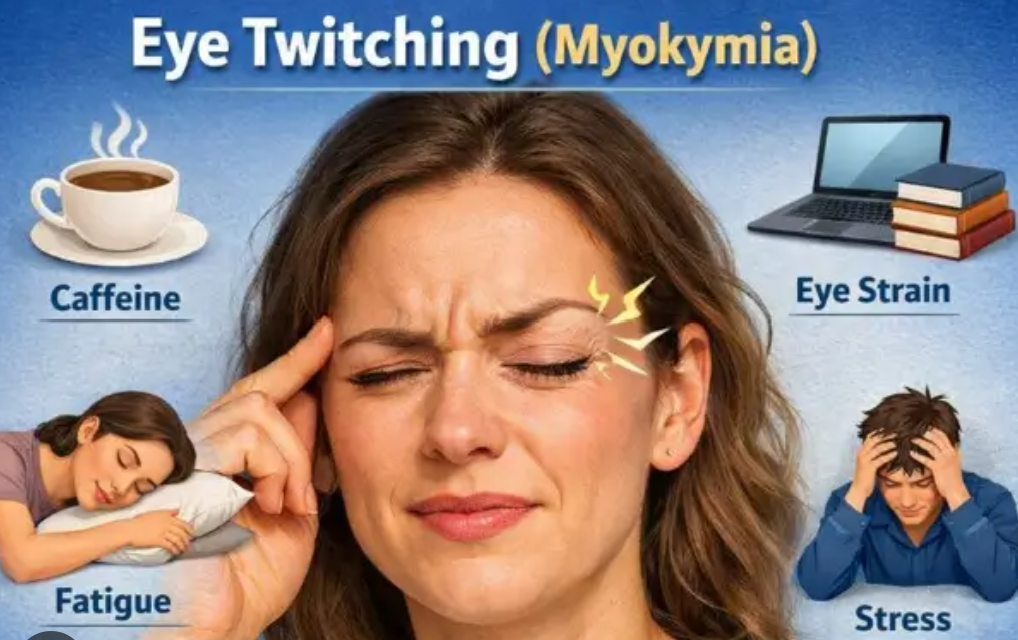
⚡ Quick answer: That annoying eyelid twitch — doctors call it eyelid myokymia — is almost always harmless. It is your eyelid muscle firing on its own, usually because of stress, poor sleep, too much caffeine, or long screen hours. In most people it disappears on its own within a few days to two weeks. Worry only if: it lasts beyond 2–3 weeks, your eye squeezes fully shut, other face muscles join in, or the eyelid droops — those need a doctor’s evaluation. If your twitch isn’t settling, call 077188 85245 — a 10-minute check at Crystal Clear Eye Clinic, Andheri West settles the question.
- Most common types of refractive eye surgery which one is right for you
- Mrcs edinburgh how i joined a royal college founded in 1505
- Multifocal trifocal iol guide complete patient guide
- Oct eye test in andheri west mumbai cost procedure report why the specialist reading it matters
- People do ask google about this eye issue
- Refraction in real time how the royal college of ophthalmologists tested me in kuching 2017
- Refractive lens exchange rlethe complete guide to clear vision without glasses
- Retina laser treatment in andheri west mumbai prp barrage focal micropulse laser by dr jignesh gala frcs
- Retina surgery in mumbai your complete guide to saving your sight
- Retina treatment in andheri
- Retina treatment in mumbai advanced retinal care by dr jignesh gala
- Rle vs lasik which vision correction surgery is better
1. What Exactly Is an Eyelid Twitch? (Myokymia, in Plain Words)
You feel it before anyone can see it — a tiny, rhythmic flutter under the skin of one eyelid, usually the lower lid, usually one eye. It comes and goes for minutes, vanishes for hours, returns during your meeting. This is eyelid myokymia: fine, involuntary contractions of the orbicularis muscle — the circular muscle that closes your eye.
Here is the reassurance first: myokymia is one of the most common and most benign conditions in all of eye care. The muscle isn’t damaged; the nerve isn’t dying; your brain is fine. Think of it as a muscle “hiccup” — irritating, sometimes embarrassing-feeling (though others rarely notice it), but almost never dangerous. Medical literature consistently describes it as a self-limiting condition of everyday life (evidence).
What matters clinically is separating the 95% of twitches that are lifestyle-driven from the small minority that signal something needing treatment — and that separation is exactly what a short examination does. No scans, no blood tests for most people: just a trained eye and the right questions.
2. The 7 Real Causes of Eye Twitching
Myokymia has no mystery — research and clinical experience point to the same seven triggers, usually in combination:
| Trigger | Why It Causes Twitching | The Fix |
|---|---|---|
| 1. Stress & anxiety | The classic #1 cause — stress hormones make facial muscles hyper-excitable | Stress reduction; twitch often vanishes after the stressful phase passes |
| 2. Poor sleep / fatigue | Tired eyelid muscles misfire — notice it after late nights, shift work, exams | 7–8 hours of regular sleep; most twitches die within days of rest |
| 3. Caffeine | Tea, coffee, energy drinks, pre-workout supplements — caffeine directly excites muscle fibres | Cut to 1–2 cups a day for a week; watch the twitch fade |
| 4. Screen strain | 8–10 hours of screens reduce blinking from 15–20/min to 5–7/min, straining the ocular surface and lids | 20-20-20 rule (every 20 minutes, look 20 feet away for 20 seconds) |
| 5. Dry eyes | An irritated, dry ocular surface triggers reflex lid spasms — very common in AC offices and Mumbai’s pollution | Lubricating eye drops; treat the dryness, the twitch follows (dry eye & screen evidence) |
| 6. Nutrition gaps | Magnesium and B12 insufficiency are associated with muscle hyperexcitability (evidence is moderate, but correcting a deficiency helps overall) | Balanced diet; blood test if fatigue/cramps accompany the twitch |
| 7. Alcohol, smoking & eye irritation | Both alcohol and tobacco are muscle irritants; so are allergies, conjunctivitis and a foreign body | Cut back; treat the allergy/irritation |
The pattern to notice: if your twitch started during a deadline, an exam, a caffeine-heavy stretch or a Netflix marathon — you already have your diagnosis. Treat the cause, not the twitch.
3. When to Worry — Red Flags That Need a Doctor
A small minority of eyelid twitches are not myokymia. See a doctor promptly if any of these apply:
🚩 Red flags — book an evaluation if:
- The twitch lasts more than 2–3 weeks despite rest and caffeine cuts
- Your eyelid squeezes fully shut during spasms (not just a flutter)
- Other face muscles join in — cheek, mouth corner, one whole side of the face
- The eyelid droops, or the eye is red, swollen, watering or has discharge
- Both eyes spasm shut repeatedly, especially in bright light or while talking
- Any weakness, numbness, double vision, or facial asymmetry accompanies it
What could those be? Three conditions matter:
- Benign essential blepharospasm (BEB): involuntary closure of both eyes — blinking becomes squeezing; light and conversation trigger it. It is a movement disorder (a focal dystonia), well documented in the neurological literature (blepharospasm features evidence). The good news: it has a highly effective treatment — see below.
- Hemifacial spasm: twitching of one entire side of the face — eyelid plus cheek plus mouth. Usually caused by a blood vessel touching the facial nerve; botulinum toxin controls it well (hemifacial spasm evidence). An MRI is sometimes advised to confirm the cause.
- Eyelid-opening apraxia / other neurological causes: rare; occasionally associated with Parkinson’s-spectrum conditions — which is why persistent, progressive, or atypical twitching deserves a proper neuro-ophthalmic look rather than a pharmacy run.
And the question everyone in India asks — “left eye twitching ka matlab?” Let’s be honest and kind: our culture attaches meaning to which eye twitches (good news, bad news, depending on the eye and the tradition). Medically, the left and right eyelid twitch for exactly the same reasons — stress, sleep, caffeine, screens. The twitch carries a message, yes — but the message is from your lifestyle, not from fate. Enjoy the folklore; treat the fatigue. 😊
4. Treatment: What Actually Works (and What’s a Myth)
For ordinary myokymia (95% of twitching):
- Sleep 7–8 hours for a week — the single most effective “medicine.”
- Halve your caffeine for 7–10 days and watch the result.
- Lubricating drops (preservative-free) 4 times a day if you work in AC or on screens.
- 20-20-20 screen discipline + conscious full blinks.
- Warm compress over closed lids, 5 minutes twice a day — relaxes the lid muscles and the oil glands.
- De-stress deliberately — walk, gym, meditation; the twitch is often your body’s stress-o-meter.
What doesn’t work: random eye drops from the chemist, “eye vitamins” marketed for twitching, and home remedies applied inside the eye. Please don’t put anything into your eye that wasn’t prescribed.
For blepharospasm and hemifacial spasm (the conditions that need us): the gold-standard treatment is botulinum toxin (Botox) injections into the over-active muscles — a 10-minute outpatient procedure that relaxes the spasms for 3–4 months per session, with decades of strong evidence behind it (botulinum toxin evidence). Severe hemifacial spasm also has a surgical option (microvascular decompression) for suitable candidates — we’ll tell you honestly which category you fall into.
5. The Mumbai Screen-Time Connection
In our Andheri West clinic, the typical eyelid-twitch patient of 2026 is a 24–40-year-old professional: 9 hours of laptop, 3 hours of phone, 5–6 hours of sleep, 3 coffees, AC all day, and a commute past Jogeshwari traffic. That recipe dries the ocular surface and over-excites the lid muscles — twitching is the predictable invoice.
If this sounds like you, the fix is boring and effective: screens down an hour before bed, caffeine before 2 pm only, lubricant drops at your desk, and the 20-20-20 rule during work. Give it ten days. If the twitch is still tap-dancing after that — or if anything from the red-flag list applies — come in. Sometimes the most valuable thing a doctor gives you is a confirmed “you’re fine,” backed by an actual examination rather than a search engine.
6. Why Patients Choose Dr. Jignesh Gala
Dr. Jignesh Gala — FRCS (Glasgow), MRCS (Edinburgh), FICO — is the Founder & Director of both Crystal Clear Eye Clinic (Andheri West) and Topax Eye Hospital (Vile Parle East). Fellowship-trained at L.V. Prasad Eye Institute, a former Assistant Professor at B.Y.L. Nair Hospital, and a six-year BMJ Case Reports peer reviewer, he brings hospital-grade evaluation to everyday symptoms.
✅ The honest-triage promise: if your twitch is simple myokymia, you’ll leave with reassurance and a lifestyle plan — not an unnecessary bill.
✅ Complete evaluation where needed: dry-eye workup, refraction check (uncorrected power itself strains lids), and neuro-ophthalmic assessment when red flags exist.
✅ Fully aware of the latest research — unlike old practitioners who stopped reading journals years ago — including 2026 evidence on blepharospasm care and botulinum protocols (library below).
✅ Both centres are his own — continuity from first visit to any procedure, with reports explained in Hindi, Marathi, Gujarati or English.
7. Locations — Eye Twitching Evaluation in Andheri West & Vile Parle East
1) Crystal Clear Eye Clinic — Andheri West
📍 Address: Laram Centre CHS, A1-202, Swami Vivekanand Road, above Sunil Jewellers, near NADCO Shopping Centre, Railway Colony, Andheri West, Mumbai 400058
📞 Phone: 077188 85245 • 🕘 Open daily, closes 9 pm
💳 Third-party / TPA cashless is done through Crystal Clear Eye Clinic.
Minutes from Andheri station, Lokhandwala, Versova, Yari Road, Juhu, Oshiwara, DN Nagar, Seven Bungalows, Azad Nagar, Veera Desai Road, Jogeshwari West and Amboli — easy after-work visits for the screen-heavy professional.

2) Topax Eye Hospital — Vile Parle East
📍 Vile Parle East, Mumbai (full address on drjigneshgalaeye.com) • 📞 077188 85245
💳 Direct cashless is done through Topax Eye Care. Convenient for Vile Parle, Santacruz, Khar, Bandra East, Kalina and the airport corridor.
8. हिंदी • मराठी • ગુજરાતી — Patient Summaries
🇮🇳 हिंदी सारांश — पलक का फड़कना
पलक फड़कना (aankh phadakna) ज़्यादातर बिल्कुल सामान्य है — तनाव, नींद की कमी, ज़्यादा चाय-कॉफी और लंबा स्क्रीन टाइम इसके असली कारण हैं। कुछ दिनों में खुद ठीक हो जाता है। डॉक्टर को कब दिखाएं: 2–3 हफ्ते से ज़्यादा चले, आँख पूरी बंद हो जाए, चेहरे के दूसरे हिस्से भी फड़कें, या पलक झुक जाए। अंधेरी वेस्ट में जांच के लिए कॉल करें: 077188 85245।
🚩 मराठी सारांश — डोळकणे फटफटणे
डोळकणे फटफटणे बहुतेक वेळा निर्दोष असते — ताण, झोपेची कमतरता, जास्त चहा-कॉफी व स्क्रीन वेळ ही कारणे. काही दिवसांत आपोआप थांबते. डॉक्टरांना केव्हा दाखवावे: २–३ आठवड्यांपेक्षा जास्त चालू राहिल्यास, डोळा पूर्ण बंद होत असल्यास किंवा चेहऱ्याचे इतर भागही फटफटत असल्यास. अंधेरी वेस्ट येथे तपासणीसाठी कॉल: 077188 85245.
🟡 ગુજરાતી સારાંશ — પલક ફટકવું
પલક ફટકવું મોટેભાગે સામાન્ય છે — તણાવ, ઊંઘની ઊણપ, વધુ ચા-કોફી અને લાંબો સ્ક્રીન ટાઈમ તેના કારણો છે. થોડા દિવસમાં જાતે જ બંધ થઈ જાય છે. ડૉક્ટરને ક્યારે બતાવવું: ૨–૩ અઠવાડિયાથી વધુ ચાલે, આંખ સંપૂર્ણ બંધ થઈ જાય, કે ચહેરાના બીજા ભાગો પણ ફટકે. અંધેરી વેસ્ટમાં તપાસ માટે કૉલ: 077188 85245.
9. ❓ 8 Frequently Asked Questions (English + Hinglish)
1. Eye twitching kyun hoti hai? (Why does my eyelid twitch?)
Most commonly: stress, lack of sleep, excess caffeine, long screen hours, or dry eyes. The eyelid muscle becomes temporarily over-excitable and fires on its own — this is called myokymia. It is annoying but almost always harmless and settles once the trigger is corrected.
2. Is eye twitching a sign of something serious?
In about 95% of people — no. Worry only if it lasts beyond 2–3 weeks, forces the eye fully shut, spreads to cheek or mouth, comes with a drooping lid, or brings redness, discharge, double vision or facial weakness. Those patterns need a doctor’s evaluation to rule out blepharospasm, hemifacial spasm or (rarely) neurological causes.
3. Left eye twitching ka kya matlab hota hai? (And right eye?)
Medically, left and right eyelid twitching mean exactly the same thing — your lid muscle is tired or over-stimulated. Cultural beliefs assign luck to one eye or the other, and we respect the sentiment — but the twitch itself is biology, not prophecy. Treat the fatigue, keep the folklore. 😊
4. How long does eye twitching last? Kab tak chalti hai?
Simple myokymia typically comes and goes over a few days and settles within 1–2 weeks once you sleep better and cut caffeine. If it persists beyond 2–3 weeks despite lifestyle correction, get it examined — persistent twitching deserves a proper look.
5. Eye twitching ke liye kaunse drops ya ilaaj hai?
For ordinary twitching, the treatment is lifestyle: sleep, caffeine reduction, screen breaks, warm compresses, and preservative-free lubricating drops if your eyes feel dry. There is no “anti-twitch” eye drop. For true blepharospasm or hemifacial spasm, botulinum toxin (Botox) injections are the proven treatment — given as a quick outpatient procedure.
6. When should I see a doctor for eye twitching?
See a doctor if: it lasts over 2–3 weeks; the eye squeezes shut; other facial muscles join in; the lid droops; or you notice redness, discharge, double vision or facial weakness. Otherwise, fix sleep and caffeine first for a week — most twitches surrender on their own.
7. Does caffeine or screen time really cause eyelid twitching?
Yes — both are among the best-documented triggers. Caffeine directly excites muscle fibres, and long screen time slashes your blink rate, straining the ocular surface and lids. Try 7–10 days of reduced caffeine plus the 20-20-20 rule; most patients see the twitch fade within that window.
8. Eye twitching ke liye doctor kahan dikhayein Andheri West mein?
Crystal Clear Eye Clinic — Laram Centre CHS, A1-202, S.V. Road, above Sunil Jewellers, near NADCO Shopping Centre, Andheri West 400058; or Topax Eye Hospital, Vile Parle East. Phone: 077188 85245. Open daily, closes 9 pm. A 10-minute check gives you a definite answer.
13. 📖 Related Reading — Complete Eye-Care Library by Dr. Jignesh Gala (78 guides)
Every guide below is written by the same surgeon who would operate on you:
From drjigneshgalaeye.com
- Drjigneshgalaeye.com
- A year at l v prasad eye institute how my vitreoretinal fellowship shaped the surgeon i am today
- About us
- Anti vegf injection cost in mumbai 2026 every drug every price explained honestly by a retina specialist
- B y l nair hospital 2019 2020 my sixteen months as assistant professor of ophthalmology
- Bakuchiol eye cream a gentle revolution in under eye care
- Best eye doctor for retina in mumbai dr jignesh gala retina vitreoretinal surgeon
- Best eye specialist in andheri mumbai
- Best retina specialist mumbai dr jignesh gala
- Best vision correction surgery after 40 what are your options
- Blogs by dr jignesh gala
- Cashless eye surgery in mumbai dr jignesh gala
- Diabetic retinopathy specialist in andheri west mumbai advanced screening injections laser vitrectomy by dr jignesh gala frcs
- Discover crystal clear vision with contoura lasik in mumbai
- Dr jignesh gala top eye specialist in mumbai
- Drjignesh gala premier pediatric ophthalmologistandheri mumbai
- Eylea injection in mumbai cost uses side effects the 2026 price revolution explained by a retina specialist
- Glaucoma treatment in andheri mumbai
- How to prevent dry eyes in winter
- Hvf test in andheri west mumbai visual field test cost procedure how to read your report by a specialist
- I see a curtain or shadow in my vision
- Inside my six years as a bmj case reports peer reviewer
- Inside the fico 2016 the only worldwide medical specialty examination
- Inside the frcs ophth glasgow how a 425 year old royal college tests your surgical knowledge
- Intravitreal injection in andheri west mumbai painless anti vegf eye injections by dr jignesh gala frcs
- Know your eye doctor
- Laser cataract surgery in andheri mumbai dr jignesh gala
- Laser cataract surgery
- Lasik eye surgery in andheri mumbai dr jignesh gala
- Lasik eye surgery in bandra mumbai dr jignesh gala
- Lasik eye surgery in juhu dr jignesh gala
- Lasik eye surgery in lokhandwala dr jignesh gala
- Lasik eye surgery in oshiwara dr jignesh gala
- Lasik in santacruz mumbai
- Lasik in versova mumbai dr jignesh gala
- Lasik surgery in andheri mumbai
- Most common types of refractive eye surgery which one is right for you
- Mrcs edinburgh how i joined a royal college founded in 1505
- Multifocal trifocal iol guide complete patient guide
- Oct eye test in andheri west mumbai cost procedure report why the specialist reading it matters
- People do ask google about this eye issue
- Refraction in real time how the royal college of ophthalmologists tested me in kuching 2017
- Refractive lens exchange rlethe complete guide to clear vision without glasses
- Retina laser treatment in andheri west mumbai prp barrage focal micropulse laser by dr jignesh gala frcs
- Retina surgery in mumbai your complete guide to saving your sight
- Retina treatment in andheri
- Retina treatment in mumbai advanced retinal care by dr jignesh gala
- Rle vs lasik which vision correction surgery is better
- Satisfied patient stories
- Singapore 2021 a year on the founding ophthalmology team of woodlands health
- Smartsurf with customeyes the most advanced glass removal surgery in mumbai and why it outperforms wavelight plus innoveyes
- Surgery packages
- Surgical videos by dr jignesh gala
- Types of intraocular lenses
- Types of refractive surgeries
- Types of retina surgeries
- Understanding and preventing digital eye strain
From crystalcleareye.in
- Crystal Clear Eye Clinic — Home
- About Crystal Clear Eye Clinic, Andheri West
- Eye Health Blog — Crystal Clear Eye Clinic
- Contact & Directions — Andheri West
- Glaucoma Treatment in Andheri, Mumbai
- LASIK Surgery in Andheri, Mumbai
- Premium IOL Selection Guide 2026
- Laser Cataract Surgery in Andheri, Mumbai
- Best Eye Specialist in Andheri, Mumbai
- Best Retina Specialist in Mumbai
- Best Vitrectomy Surgery in Mumbai — Expert Retinal Care
- Diabetic Eye Care in Mumbai
- Diabetic Retinopathy in Andheri
- Diabetic Macular Edema (DME) Treatment in Mumbai
- Macular Edema Treatment in Andheri West
- ARMD Treatment in Andheri West, Mumbai
- Retina Treatment in Andheri
- Vitreoretinal Treatment in Andheri
- Cashless Eye Surgery in Mumbai
- Sudden Floaters? Retina Check-up in Mumbai
- What Is an Intravitreal Eye Injection?
Your retina deserves a specialist. Today, not someday.
That twitch is almost always your body asking for rest — but if it has crossed two weeks or pulled other muscles along, let a doctor look at it.
📍 Andheri West: Laram Centre CHS, A1-202, S.V. Road, above Sunil Jewellers, near NADCO Shopping Centre, Mumbai 400058
📍 Vile Parle East: Topax Eye Hospital • Open daily, closes 9 pm
Dr. Jignesh Gala, FRCS (Glasgow) — Vitreoretinal & Cataract Surgeon • drjigneshgalaeye.com • crystalcleareye.in
Medical disclaimer: This page is educational and does not replace a personal consultation. Prices are indicative, verified on 24 July 2026, and may change. Every eye is different — decisions are made only after examination by Dr. Jignesh Gala.
Research & Evidence Library — 81 Verified References
Every link verified live in July 2026 via official NCBI E-utilities — the same research Dr. Gala reads. Click any title to check the science yourself.
Eyelid Myokymia (Benign Twitching)
- Metformin-induced eyelid myokymia. — Indian journal of pharmacology, 2024
- Eyelid myokymia. — Survey of ophthalmology, 2011
- Eyelid Myokymia-a Presumed Manifestation of Coronavirus Disease 2019 (COVID-19). — SN comprehensive clinical medicine, 2022
- Topiramate-Induced Persistent Eyelid Myokymia. — Case reports in psychiatry, 2016
- Marcus Gunn Jaw-Winking Synkinesis With Ipsilateral Eyelid Myokymia. — Ophthalmic plastic and reconstructive surgery, 2020
- Eyelid myokymia in patients with migraine taking topiramate. — Acta neurologica Scandinavica, 2015
- Eyelid myokymia caused by a trigeminal schwannoma as determined by the trigeminal-evoked blink reflex. — Clinical case reports, 2023
- Eyelid myokymia: not always benign. — Orbit (Amsterdam, Netherlands), 2011
- Eyelid Myokymia with Concomitant Cerebral Tumour: A Case Report. — Neuro-ophthalmology (Aeolus Press), 2018
Benign Essential Blepharospasm & Botulinum Toxin
- Botulinum toxin for benign essential blepharospasm: A systematic review and an algorithmic approach. — Revue neurologique, 2021
- [Therapy of Benign Essential Blepharospasm with Botulinum Toxin]. — Fortschritte der Neurologie-Psychiatrie, 2019
- Botulinum Toxin Injection for Hemifacial Spasm and Benign Essential Blepharospasm: A Systematic Review and Meta-Analysis Comparing Pretarsal and Preseptal Injection Techniques. — Aesthetic plastic surgery, 2025
- Benign essential blepharospasm. — The neurologist, 2005
- Benign essential blepharospasm. — International ophthalmology clinics, 2002
- Benign essential blepharospasm. — International ophthalmology clinics, 2005
- Developments in the treatment of benign essential blepharospasm. — Current opinion in ophthalmology, 2018
- Long-term botulinum toxin treatment of benign essential blepharospasm, hemifacial spasm, and Meige syndrome. — American journal of ophthalmology, 2013
- THE EFFECT OF BOTULINUM TOXIN TYPE A IN PATIENTS WITH ESSENTIAL BLEPHAROSPASM. — Acta clinica Croatica, 2022
- Effectiveness of 0.3% Hyaluronic Acid Eye Drops for Benign Essential Blepharospasm and Hemifacial Spasm with Botulinum Toxin-induced Dry Eye. — Plastic and reconstructive surgery. Global open, 2024
Hemifacial Spasm
- Botulinum toxin treatment for hemifacial spasm: harmonising neurological and aesthetic outcomes. — Journal of neural transmission (Vienna, Austria : 1996), 2025
- Hemifacial spasm: an update on pathophysiology, investigations and management. — Journal of neurology, 2025
- Botulinum Toxin for the Treatment of Hemifacial Spasm: An Update on Clinical Studies. — Toxins, 2021
- [Hemifacial spasm]. — Zhurnal nevrologii i psikhiatrii imeni S.S. Korsakova, 2020
- Botulinum Toxin Treatment of Blepharospasm, Orofacial/Oromandibular Dystonia, and Hemifacial Spasm. — Seminars in neurology, 2016
- Botulinum toxin type A therapy for hemifacial spasm. — The Cochrane database of systematic reviews, 2020
- Clinical Application of Botulinum Toxin for Hemifacial Spasm. — Life (Basel, Switzerland), 2023
- Botulinum toxin in hemifacial spasm: the challenge to assess the effect of treatment. — Journal of neural transmission (Vienna, Austria : 1996), 2012
- Botulinum toxin in the treatment of blepharospasm and hemifacial spasm. — Journal of neural transmission (Vienna, Austria : 1996), 2008
Dry Eye, Screen Time & Ocular Surface Strain
- [Digital eye strain. Symptoms, prevalence, pathophysiology, and management]. — Journal francais d’ophtalmologie, 2021
- Digital Applications for Videoterminal-Associated Dry Eye Disease. — Vision (Basel, Switzerland), 2024
- Association of digital device usage and dry eye disease in school children. — Indian journal of ophthalmology, 2024
- Dry Eye Disease among Young Pakistanis: Association with Digital Screen Use. — Journal of the College of Physicians and Surgeons–Pakistan : JCPSP, 2026
- Effect of blue-filtering lens spectacles on signs and symptoms of dry eye during exposure to a digital screen. — Ophthalmic & physiological optics : the journal of the British College of Ophthalmic Opticians (Optometrists), 2025
- Predictive analysis of dry eye diagnosis and digital screen usage: a cross-sectional study. — International journal of ophthalmology, 2025
- Overview of Dry Eye Disease for Primary Care Physicians. — Medicina (Kaunas, Lithuania), 2025
- Digital eye health and behavioral determinants of screen use among university students in the UAE. — Frontiers in digital health, 2026
- Dry eye in primary care: the relationship between digital display device usage and dry eye syndrome (DES) in medical students. — Family practice, 2024
- Timing of Digital Device Exposure as a Source of Measurement Error in Dry Eye Disease Research: A Critical Narrative Review. — Cureus, 2026
Blepharospasm Diagnosis & Differential
- Clinical Features and Evolution of Blepharospasm: A Multicenter International Cohort and Systematic Literature Review. — Dystonia (Lausanne, Switzerland), 2022
- Clinical Features of Benign Essential Blepharospasm in Korean Patients. — Korean journal of ophthalmology : KJO, 2018
- Tardive blepharospasm. — Journal of neurology, 2026
- Lesion-Induced Blepharospasm: Epidemiology and Clinical Characteristics. — Tremor and other hyperkinetic movements (New York, N.Y.), 2025
- Cranial dystonia, blepharospasm and hemifacial spasm: clinical features and treatment, including the use of botulinum toxin. — CMAJ : Canadian Medical Association journal = journal de l’Association medicale canadienne, 1988
- Unusual Clinical Presentations Challenging the Early Clinical Diagnosis of Creutzfeldt-Jakob Disease. — Journal of Alzheimer’s disease : JAD, 2018
- A pilot exploratory study for analysis of clinical features and plasma catecholamines in blepharospasm. — Scientific reports, 2025
- Diagnosis and classification of blepharospasm: Recommendations based on empirical evidence. — Journal of the neurological sciences, 2022
- Diagnosis of primary hemifacial spasm. — Neuro-Chirurgie, 2018
- Smartphone video-based early diagnosis of blepharospasm using dual cross-attention modeling enhanced by facial pose estimation. — NPJ digital medicine, 2025
Computer Vision Syndrome & Asthenopia
- Computer Vision Syndrome: An Ophthalmic Pathology of the Modern Era. — Medicina (Kaunas, Lithuania), 2023
- Digital eye strain in young screen users: A systematic review. — Preventive medicine, 2023
- Interventions for the Management of Computer Vision Syndrome: A Systematic Review and Meta-analysis. — Ophthalmology, 2022
- TFOS Lifestyle: Impact of the digital environment on the ocular surface. — The ocular surface, 2023
- [COMPUTER VISION SYNDROME]. — Harefuah, 2021
- Ocular and visual discomfort associated with smartphones, tablets and computers: what we do and do not know. — Clinical & experimental optometry, 2019
- Spotlight on Digital Eye Strain. — Clinical optometry, 2023
- Rasch-Validated Italian Scale for Diagnosing Digital Eye Strain: The Computer Vision Syndrome Questionnaire IT©. — International journal of environmental research and public health, 2022
- Astaxanthin (AstaReal(®)) Improved Acute and Chronic Digital Eye Strain in Children: A Randomized Double-Blind Placebo-Controlled Trial. — Advances in therapy, 2025
- Contact lenses and digital eye strain. — Clinical & experimental optometry, 2026
- Computer vision syndrome among students during remote learning periods: harnessing digital solutions for clear vision. — Frontiers in public health, 2023
Botulinum Toxin: Long-Term Blepharospasm Outcomes
- Long-term treatment of blepharospasm with botulinum toxin A: a service-based study over a 16-year follow-up in southern China. — Neurological sciences : official journal of the Italian Neurological Society and of the Italian Society of Clinical Neurophysiology, 2020
- Deep brain stimulation for Meige syndrome. — Surgical neurology international, 2025
- Long-term Efficacy of Botulinum Neurotoxin-A Treatment for Essential Blepharospasm. — Korean journal of ophthalmology : KJO, 2018
- Long-term efficacy and safety of botulinum toxin A injections to treat blepharospasm and hemifacial spasm. — Clinical & experimental ophthalmology, 2014
- Long-term efficacy of botulinum toxin A for treatment of blepharospasm, hemifacial spasm, and spastic entropion: a multicentre study using two drug-dose escalation indexes. — Eye (London, England), 2010
- Depressive symptoms and quality of life in patients with benign essential blepharospasm under long-term therapy with botulinum toxin. — Acta neurologica Belgica, 2025
- Treatment of blepharospasm with botulinum neurotoxin type A: long-term results. — European journal of ophthalmology, 2003
- Long-term stable efficacy of botulinum toxin A in facial movement disorders with no need for increasing dose. — Medicine, 2021
- Surgical Management of Essential Blepharospasm: Long-Term Results After Orbicularis Myectomy. — Ophthalmic plastic and reconstructive surgery, 2026
- Long-term efficacy of botulinum toxin A in treatment of various movement disorders over a 10-year period. — Movement disorders : official journal of the Movement Disorder Society, 2002
- Frontalis suspension in the treatment of essential blepharospasm unresponsive to botulinum-toxin therapy: long-term results. — Graefe’s archive for clinical and experimental ophthalmology = Albrecht von Graefes Archiv fur klinische und experimentelle Ophthalmologie, 1997
Blepharospasm & Hemifacial Spasm: Quality Of Life
- Which factors impact on quality of life for adults with blepharospasm and hemifacial spasm? — Orbit (Amsterdam, Netherlands), 2021
- Subjective assessment of effectiveness, quality of life, and psychological status of patients receiving botulinum toxin therapy for hemifacial spasm, blepharospasm, or cervical dystonia. — Fujita medical journal, 2021
- Health-related quality of life in blepharospasm or hemifacial spasm. — Acta neurologica Scandinavica, 2005
- Quality of life in hemifacial spasm patient after treatment with botulinum toxin A; a 24-week, double-blind, randomized, cross-over comparison of Dysport and Neuronox study. — Journal of the Medical Association of Thailand = Chotmaihet thangphaet, 2012
- Factors associated with quality of life in hemifacial spasm and blepharospasm during long-term treatment with botulinum toxin. — Quality of life research : an international journal of quality of life aspects of treatment, care and rehabilitation, 2011
- Clinical Study on the Use of Botulinum Toxin for Blepharospasm and Hemifacial Spasm. — Medical archives (Sarajevo, Bosnia and Herzegovina), 2024
- Mental health and quality of life in patients with craniofacial movement disorders: A cross-sectional study. — Frontiers in neurology, 2022
- Patient Characteristics and Real-World Use of Botulinum Toxins for the Treatment of Cervical Dystonia, Blepharospasm, and Hemifacial Spasm. — Toxins, 2024
- Real-World, Long-Term Quality of Life Following Therapeutic OnabotulinumtoxinA Treatment. — The Canadian journal of neurological sciences. Le journal canadien des sciences neurologiques, 2016
- Evaluation of non-motor symptoms in cervical dystonia, hemifacial spasm, and blepharospasm patients and their correlation with motor symptoms. — Neurological sciences : official journal of the Italian Neurological Society and of the Italian Society of Clinical Neurophysiology, 2023
- A patient-initiated treatment model for blepharospasm and hemifacial spasm: a randomized controlled trial. — BMC neurology, 2022